
Crack Sealing vs Crack Filling: Which?
Last updated: October 2026
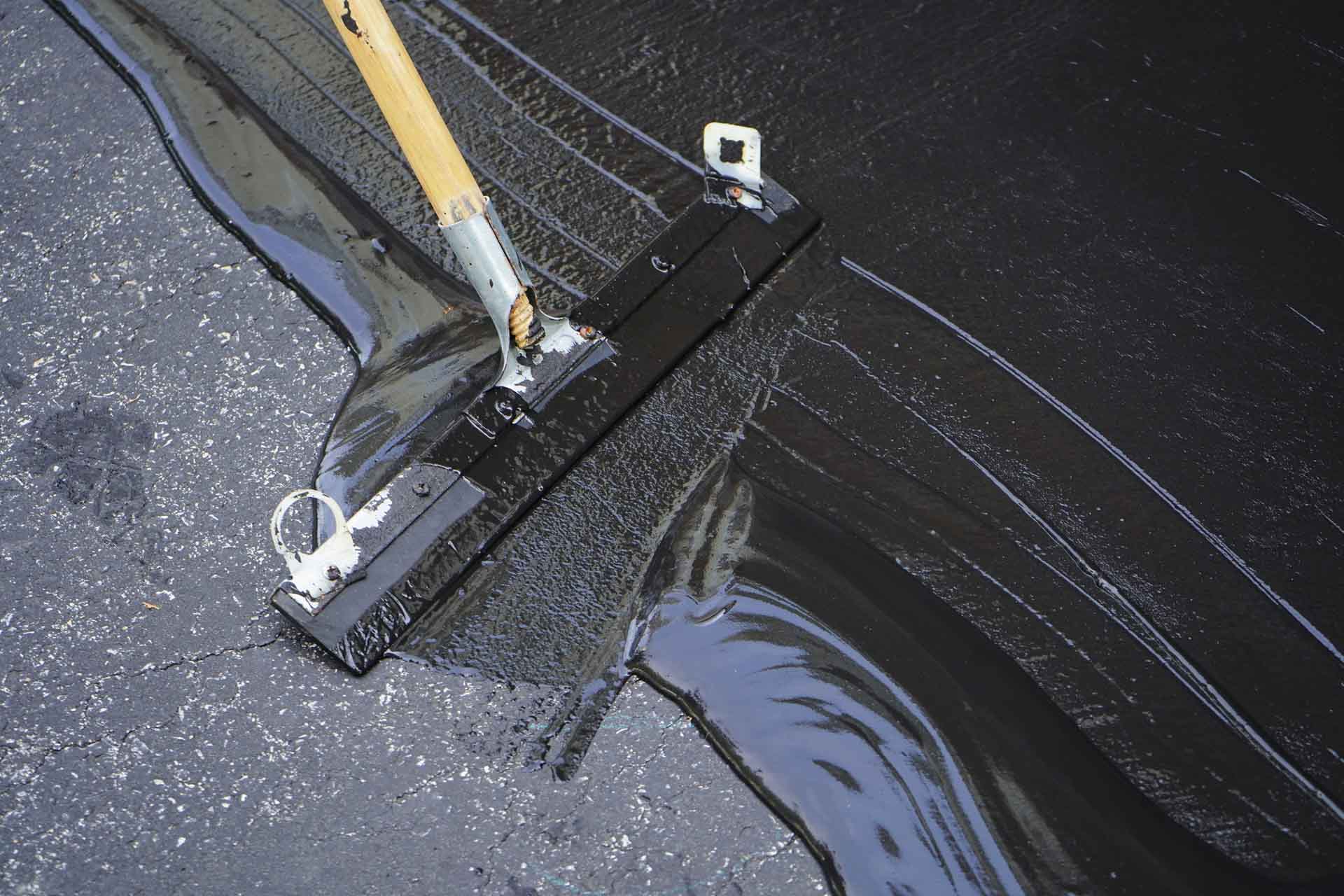
Crack sealing and crack filling both keep water out of asphalt, but they're built for different cracks. Crack sealing uses a flexible, hot-applied rubberized sealant for "working" cracks — the ones that open and close as pavement expands in summer and contracts in winter. Crack filling uses a less flexible material for stable, non-moving cracks. In the Kansas City metro, where freeze-thaw cycles keep pavement moving all winter, most driveway and parking lot cracks call for sealing — and fall is the time to get it done.
What Is a Working Crack?
A working crack moves with temperature. You'll usually see it running across a driveway or lot, and it gets wider in cold weather. Because it keeps moving, it needs a sealant that stretches and recovers without pulling away from the edges. That's the job crack sealing is designed for.
How Do Crack Sealing and Crack Filling Compare?
| Crack sealing | Crack filling | |
|---|---|---|
| Best for | Working cracks that move with temperature | Stable cracks that don't move much |
| Material | Hot-applied rubberized sealant | Less flexible filler material |
| Prep | Cleaned and dried; sometimes routed | Cleaned and dried |
| Holds up through freeze-thaw | Yes — built to flex | Less reliably on moving cracks |
When Is a Crack Too Far Gone to Seal?
Sealing works on individual cracks. If you're seeing alligator cracking — a web of connected cracks — or potholes, the base underneath is breaking down and the area needs patching or an overlay instead. Read asphalt repairs and overlays before winter for how we decide.
Why Seal Cracks Before Winter?
Water that gets into a crack freezes, expands and pushes the crack wider every time the temperature swings. Over one Missouri winter, a hairline crack can become a pothole. Sealing in fall — while it's still warm and dry enough for the material to bond — stops that cycle before it starts. Sealed cracks also need to be done before seal coating, never after.
Frequently Asked Questions
How long does crack sealing last?
Properly applied sealant typically lasts several years, depending on traffic and how much the crack moves. Checking cracks every fall keeps new ones from getting ahead of you.
Can I drive on the driveway right after crack sealing?
Usually soon after — hot-applied sealant sets quickly. We'll tell you exactly when on the day of the job.
Do you crack seal commercial parking lots?
Yes. Learn more on our crack sealing page, and see the Asphalt Institute for more on pavement preservation.
Cracks showing up? Call (816) 833-0200 or request a free estimate — same-day response, serving Independence since 2002.